
1. Write down the event constraints
Confirm the start and finish time, breaks, audience, volume constraints and any agreed guest wishes. Separate a mandatory first dance or closing number from optional requests. Include setup and announcements in the timing: sixty minutes of songs is not sixty minutes of uninterrupted performance. Ask who gives the cue if the venue changes the schedule.
2. Plan blocks with a little room to move
Use an original example: a 45-minute opening block can allocate about 36 minutes to eight rehearsed numbers averaging four and a half minutes, and nine minutes to introductions, transitions and a margin. This is a planning example, not a rule about song length. Replace the estimates with timings from your own rehearsal. If a mandatory item runs long, know which optional item can be omitted.
- Open with material the whole band can play confidently.
- Group compatible styles while avoiding a flat energy level.
- Mark any mandatory guest wishes and reserve a flexible slot.
- Give each block a recognizable name and confirm its approximate finish time.
3. Rehearse the transitions, not only the songs
Check the end of one number and the beginning of the next. Note a change of instrument, starting key, count-in and who starts. A compact cue such as "four-count intro; shared stop" is easier to scan than a paragraph. Agree which leader updates the current-song marker; everybody opening different records is not the same as agreeing on the order.
4. Check the order on each device and prepare a backup
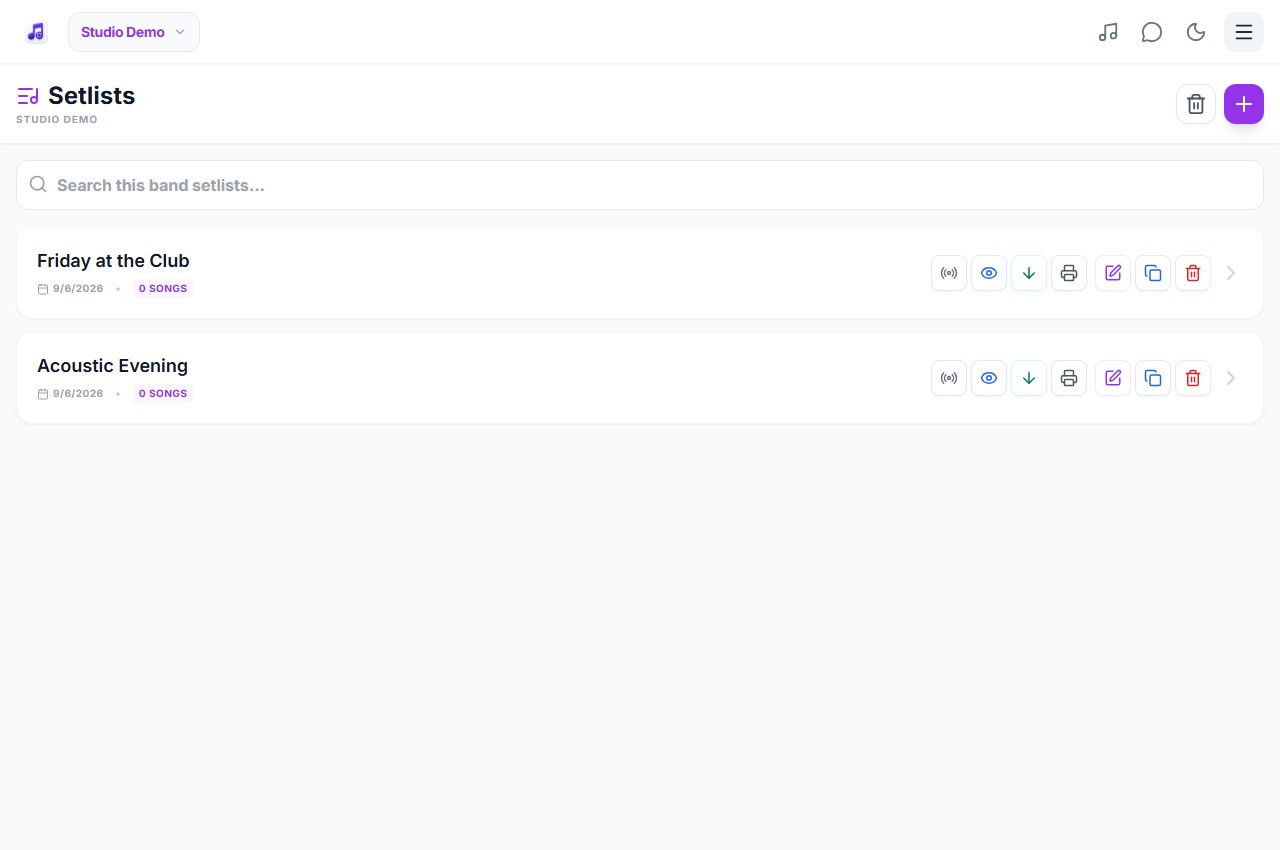
In BandSet, add entries from the band library and choose an insertion position for later additions. Review the current and next item together, then test a late request. Save an offline pack on each device while online if your access supports it, and verify it without reception. Export a readable PDF for organizers or a paper backup; only include material you are allowed to distribute. Recheck the final order with the band before the gig.
Example: plan a two-and-a-half-hour celebration
An illustrative schedule is 20:00-20:45 opening block, 20:45-21:00 break, 21:00-21:45 main block, 21:45-22:00 break and 22:00-22:30 closing block. That is 120 minutes of performance and 30 minutes of breaks, not 150 minutes of songs. Put an agreed first dance or birthday moment in the appropriate block and ask who gives the cue. This is an original planning example, not a suggested song catalog or a fixed rule for every wedding.
- Estimate each number from your own arrangement, including announcements and transitions.
- Mark mandatory guest wishes separately from optional material.
- Keep a shorter alternative block in case speeches or dinner run late.
- Confirm the revised finish time with the organizer rather than silently extending the booking.
Give the organizer a clear copy, not every stage note
Check the spelling and order before exporting a branded PDF. A guest-facing list helps explain the agreed program; the band can retain its detailed cues in the working material. Confirm the version and event with the recipient, especially if you perform several celebrations in the same weekend. If the running order changes after you send the PDF, send an updated copy instead of assuming the file updates itself.
At the gig
Your opening block is running six minutes late and a guest has one agreed request. Instead of reshuffling the whole evening, keep the mandatory item, omit the optional slot identified at rehearsal and tell the band the revised order. A flexible plan makes that decision visible and repeatable.
Practical questions
How many songs should a setlist contain?
Calculate from actual performance time, song durations, breaks and transitions. A fixed number without those details is not a reliable plan.
Should requests always go at the end?
Not necessarily. Agree the position according to the event and energy of the block, and communicate the new next item clearly.
Can I use this method without BandSet?
Yes. The planning steps work with paper or a spreadsheet. Software helps share and revise the order, but does not replace the rehearsal decisions.
Plans and availability
Start with Free: up to 25 band songs, 2 setlists, band chat and 5 song requests per rolling 24 hours. Calendar and other premium features require the appropriate access. Check current plans and availability before signing up.